
The Value of Civilization Inheritance and Traditional Incense Making
Incense can be traced back to the second year of King Zhao of Yan in the Spring and Autumn Period (585 BC), when the Kingdom of Boyi presented the "Incense of Quanwu" as a tribute.
From herbs to spices and then to essential oils, ancient people understood that incense has the effects of beauty, pain relief, fatigue relief, and depression relief.
In ancient times, incense was primarily burned. During the reign of Emperor Wu of Han, Lingnan gradually exchanged with China, and southern spices were introduced to China and palaces as a result.
Gu Yang "is a Buyi language, translated into Chinese as" making incense ", which is a skill for making incense.
The production process involves grinding camphor trees into pulp; The second method is to grind the fragrant leaves into powder and mix it with camphor wood powder. After adding water, knead it into a shape and dry it for later use; The third step is to create fragrant products and color them.
Product fragrance can be divided into long fragrance, short fragrance, string fragrance, and plate fragrance.
Worshiping Buddha may be used in the living room, also known as divine incense, Buddhist incense, or perhaps sanitary incense.
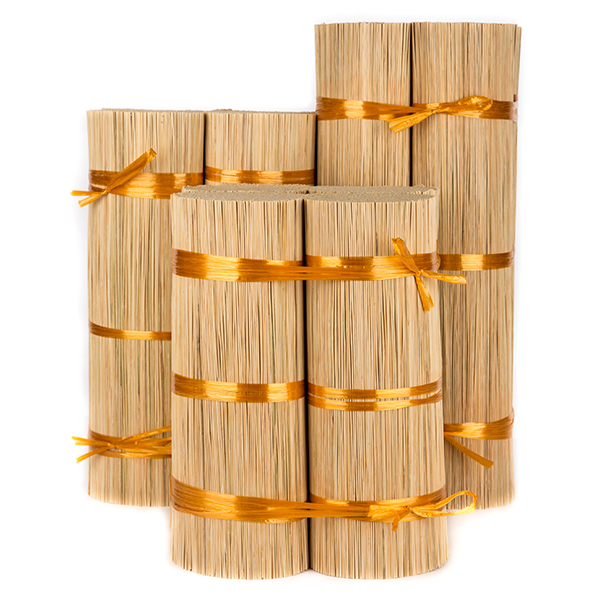
The most popular fragrance in the north is the coreless string fragrance, also known as straight stick fragrance; The popular fragrance in the south is bamboo sticks or sticks with cores.
Many people know that incense originated from worshiping Buddha, but incense was originally used for treating diseases, not for worshiping Buddha.
Fragrance not only needs to nourish the nose with fragrance, but also needs to nourish the mind, nourish the body, and enlighten the mind. This is a central principle of traditional fragrance making skills.
It is precisely because of adhering to this concept that traditional fragrances have become not only aromatic substances, but also medicines that promote wisdom and health.
There are many specific methods of fabrication, such as trimming, steaming, boiling, stir frying, grilling, roasting, baking, and flying.
Fragrance is a common strictness in the Pure Land, a longing for human life, and a world that brings comfort to both body and mind.
China is an ancient civilization with a glorious history of five thousand years. Its splendid civilization shines brightly, and the Buddhist incense civilization, with its eternal quality and charm, inherits the continuity of Chinese civilization. The fragrance of Buddha has been passed down from generation to generation in Chinese society, with the meaning of endless life and vitality, as well as the energy of respecting heaven and ancestors. In tradition, every household worships a censer. When paying respects to Buddha and ancestors, they hold incense and use the swirling smoke to convey their respect and remembrance.
Article source: Fragrant bamboo stickshttp://www.qianzhuhang.com
-
10-30
What should I do if bamboo sticks get moldy in humid weather?
According to natural bamboo raw materials, it is very easy to mold during humid weather and climate, especially during the spring, summer, and dry seasons. Continuous rainy weather for several days in
-
10-29
What are the meanings of the number of sticks used to make incense sticks?
The number of incense sticks for worshipping gods and Buddhas is generally one or three, and can be adjusted according to special needs, with a maximum of 108 sticks of incense sticks. Its significanc
-
10-28
Xiangxin Factory teaches you how to judge the quality of bamboo stick incense
Bamboo stick incense is a fragrance we often use, but many people don't know how to judge the quality of bamboo stick incense when buying it. For this reason, the incense stick factory teaches you how
-
10-27
What other types of fragrances are there besides bamboo stick fragrance?
At present, the hygiene incense in China can be classified into four categories: "stick incense and tower incense that southerners like to burn" and "string incense and pan incense that northerners li