
The process of making fragrant bamboo sticks
The material includes aggregates, binders, spices, etc.
The main component of the fragrance composed of aggregates is wood powder, which needs to have no odor, that is, no unpleasant smell; The fineness is generally around 100 mesh, with no other special requirements. Recently, other plant powders have also been used, such as various crops such as orange stalks and grass powder. Perhaps it's a combination of them.
The traditional bonding material is elm bark powder, which is used to bond the aggregates together, making the resulting product strong, elastic, and not easily broken. The quality of elm bark powder is also different. The main thing that works is the core bark in the bark, while the old bark on the outside does not work. The common name for those without old skin is white elm powder, and for those with old skin, it is red elm powder. The ratio of elm bark powder to aggregate is approximately 1:1-1:2. Due to the limited quantity of elm bark powder, chemical binders are also added in modern times.
There are various natural spices available, such as sandalwood, agarwood, etc. There can also be various spices found in traditional Chinese medicine, such as star anise and fennel. In recent years, many kinds of essence have been used. Obviously, the cost difference of different spices is quite significant. Most of the essence on the market are used. Using essence can produce a variety of scents that we like, which is no less than or better than natural spices and Chinese herbal medicines. Because some essence are extracted from natural fragrance guesses. But when it comes to the benefits for the human body, compared to natural spices and herbal spices, they are probably far behind.
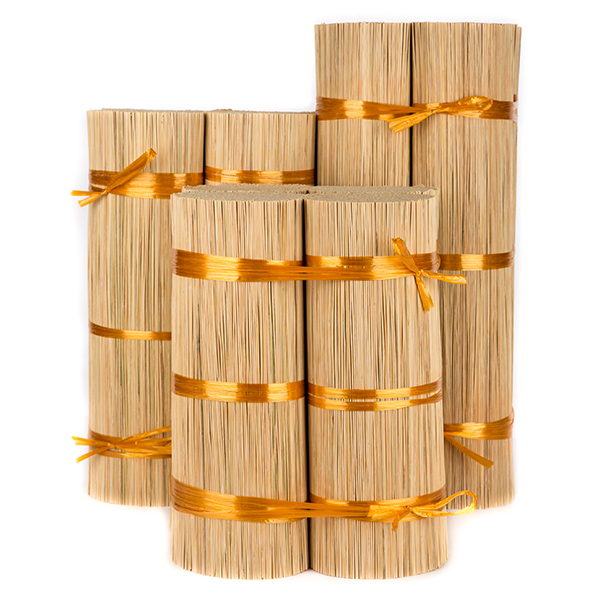
In addition to the above materials, nowadays fragrance making generally requires adding pigments to create the colors we like. There is no special requirement for pigments. Another reason is the addition of trace amounts of substances by producers in order to improve the quality of production and reduce costs. These are all secrets from producers, each with their own tricks. It is unclear to what extent these tactics are scientific and reasonable, as they are not widely disseminated.
The end of the demand is water. Strictly speaking, water cannot be considered as a material, as it only plays a role in the fragrance making process. Only after exposure to sunlight and monotony, and removing water, can the fragrance be considered as a product. But in the process of making incense, water is indispensable. In the quality guessing of Heqia, the amount of water accounts for about 40-60%, which varies greatly depending on the variety of fragrance, the process of fragrance making, and the equipment used.
For many years, due to their respective interests, the fragrance industry has been relatively closed, and producers have kept their technology confidential. Therefore, the overall development of the fragrance industry has been hindered. I feel that our country's Xiangye website has established this channel, providing a good environment and place for communication in the industry. Therefore, I hereby declare my work as a starting point for jade. I would like to ask my friends to correct any omissions in my perspective, such as local issues and outdated technology.
The main process of making fragrance is to extrude the mixed and well proportioned ingredients through the holes of the mold under pressure. The extruded incense sticks are attached to the incense sticks, and after being sorted, exposed to sunlight or dried, or reshaped, they become fragrant products. After packaging, it can be shipped from the factory.
Article source: Fragrant bamboo sticks http://www.qianzhuhang.com
-
10-30
What should I do if bamboo sticks get moldy in humid weather?
According to natural bamboo raw materials, it is very easy to mold during humid weather and climate, especially during the spring, summer, and dry seasons. Continuous rainy weather for several days in
-
10-29
What are the meanings of the number of sticks used to make incense sticks?
The number of incense sticks for worshipping gods and Buddhas is generally one or three, and can be adjusted according to special needs, with a maximum of 108 sticks of incense sticks. Its significanc
-
10-28
Xiangxin Factory teaches you how to judge the quality of bamboo stick incense
Bamboo stick incense is a fragrance we often use, but many people don't know how to judge the quality of bamboo stick incense when buying it. For this reason, the incense stick factory teaches you how
-
10-27
What other types of fragrances are there besides bamboo stick fragrance?
At present, the hygiene incense in China can be classified into four categories: "stick incense and tower incense that southerners like to burn" and "string incense and pan incense that northerners li